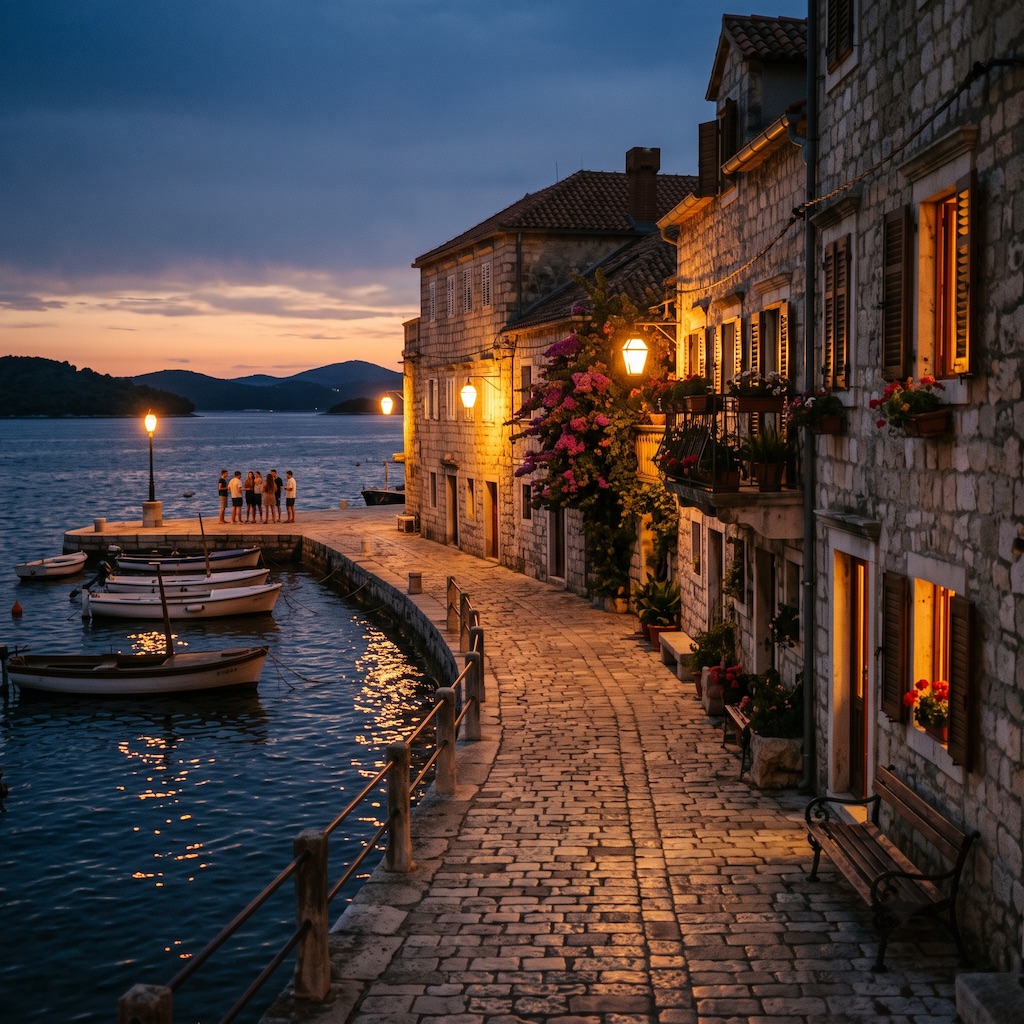
Growing Up in Croatia: The Village by the Sea
A Coastal Childhood
When I look back on my childhood in Croatia, my memory is immediately flooded with the sensory details of the coast and a very specific, deeply ingrained youth culture. I grew up in a rustic, tightly-knit village right by the edge of the sea. It was the kind of place that looks perfect on a postcard: narrow alleys paved with worn white stone, the constant, salty breeze coming off the Adriatic, and golden sunsets that would paint the water in shades of orange and purple every evening.
During the summers, the village was alive, buzzing with tourists and returning locals, the heat thick and relentless. In the winters, the tourist crowds vanished, the "Bura" wind would howl off the mountains, and the village would shrink back to its core residents. It was a great place to call home, offering a profound sense of safety and belonging. Everyone knew everyone. Secrets were impossible to keep, and the community was tight. But with that intense closeness came an unspoken set of rules and a lifestyle that most of us naturally fell into, almost without realizing it.
The Cafe Culture and Village Norms
For most kids in my village, the transition into adolescence wasn't marked by discovering intense academic passions, joining debate clubs, or committing to organized sports leagues. Instead, growing up meant graduating from playing in the streets to sitting in the cafes.
It wasn't that absolutely every single kid did this, but it was just what the majority of us did. It was simply considered normal. The local cafes and bars were the absolute center of our universe. They served as our living rooms, our meeting spots, and our primary source of entertainment. By the time you were a teenager, if you didn't have a beer in one hand or a cigarette in the other, you felt entirely out of place, like the odd one out in a very small room.
I remember the thick haze of cigarette smoke that hung in the air of every cafe we frequented. During the day, we would sit for hours nursing a single espresso, talking in circles about nothing in particular. As the sun set, the espresso cups were swapped for local lagers. We spent countless hours just hanging out, leaning against stone walls, or attending village gatherings where alcohol flowed freely late into the night.
I didn't resist this culture. In fact, I fully embraced it. I was just one of the guys, participating in the late nights, learning to smoke because my friends did, and adopting the exact same habits as the majority of kids around me. It didn't feel rebellious; it was just what was generally expected if you wanted to fit in and hang out with everyone else.
Sports and School: The Bare Minimum
Because so much of our energy was directed toward socializing, drinking, and smoking, my relationship with physical activity during those years was minimal, bordering on nonexistent. In school, I absolutely dreaded physical education classes. The thought of running laps around a dusty track or participating in structured, organized gym routines felt entirely pointless to me.
We would often find creative excuses to avoid breaking a sweat. If we couldn't skip the class entirely, we would do the absolute bare minimum required to pass, waiting for the bell to ring so we could head straight back to drinking and smoking. The concept of exercising for health, or pushing your body just to see what it could do, was completely foreign to my mindset at the time.
Water Polo: The Exception to the Rule
There was, however, one glaring exception to my total lack of athletic discipline. For a few years, the only sport I genuinely enjoyed and actively played was water polo.
When you live mere steps away from the Adriatic Sea, the water becomes a second home. You learn to swim before you can walk properly. Taking up water polo felt less like a structured sport and more like an extension of simply being in the water. But it was brutal. The physical exertion required to constantly tread water, the stinging salt in your eyes, and the sheer aggressive nature of wrestling with opponents beneath the surface was exhausting.
Yet, I loved it. Throwing a heavy ball around with my friends in the sea was the closest I ever got to real athletic discipline during my youth. We would push ourselves in the water, exhausting our lungs and muscles. But true to the culture we lived in, the moment the game was over, we would dry off, light up a cigarette, and head right back to the bar for a drink. The sport was fun, but it never translated into a broader lifestyle change or a focus on personal health.
A Meat-Centric Reality
Looking back at how I ate during those years, it is almost comical to compare it to my life now. Growing up in a traditional Croatian household, I was a massive meat eater. The concept of plant-based eating, or even vegetarianism, wasn't just off my radar; it basically didn't exist in our village.
Meals were heavy and deeply rooted in tradition. Our diet revolved heavily around meat like pork, beef, and chicken. My absolute favorite everyday staple was actually chicken breasts, though I also loved my mom's homemade lasagna on other days. I ate chicken roasted, fried, grilled, breaded, you name it. And of course, living right by the sea, our family naturally ate all sorts of fresh fish. I never actually liked it, though. Whenever the family had a fish meal, my mom would just heat up some frozen fish sticks for me instead. There were also a lot of vegetables on the table, but they were strictly viewed as an optional side dish. Because they were optional, I would usually just ignore them entirely and fill up on meat. In fact, the only side dish I ever actually ate was french fries. Bread was consumed with every single meal, used to soak up whatever meat juices were left on the plate.
That was the reality of my youth. It was a life of simple, stunning coastal beauty mixed with a deeply ingrained culture of reckless youth, grueling water polo matches in the salty Adriatic, and a heavy, meat-centric diet. It was a lifestyle that felt perfectly normal at the time, but it couldn't have been further from where I am today.